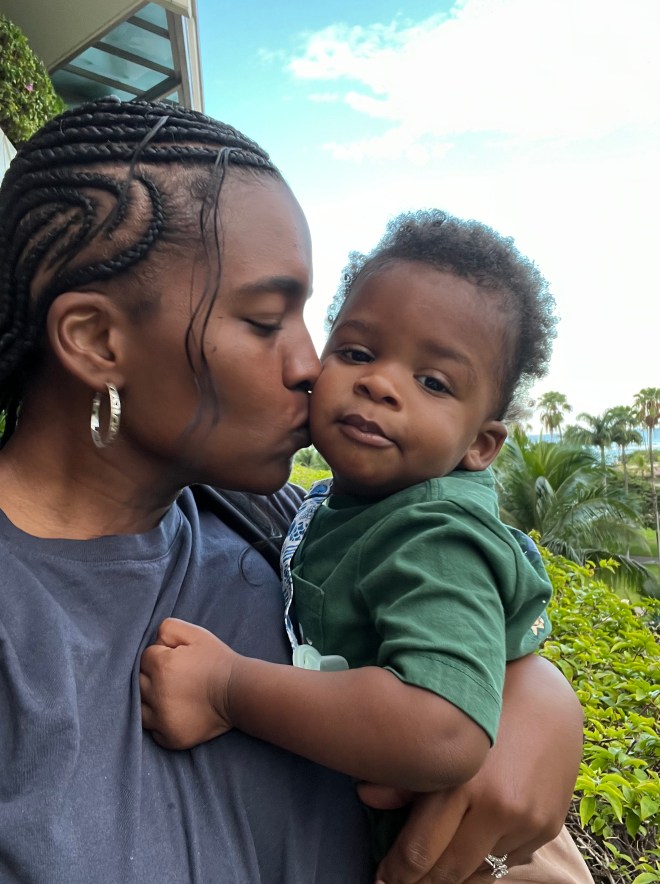
I want to emphasize that motherhood and the postpartum experience are not the same. In society, these two are often seen as interchangeable, but they are two very distinct journeys. For me, motherhood brings pure joy. My son inspires me in ways that are hard to put into words. He’s like my heartbeat outside of my body, and my love for him is immense. However, that love doesn’t make my postpartum journey any easier. In fact, loving him deeply doesn’t erase the struggles I’ve faced postpartum.
Before having Mansa, people often talked about how wonderful motherhood was, but rarely did anyone mention the challenges of the postpartum period. Looking back, only two of my friends were honest about how tough it had been for them. As my therapist has reminded me, not everything is postpartum depression (PD); sometimes, the postpartum phase is just really hard. Unfortunately, because so much is labeled as PD, many women fear expressing their struggles to family and friends, worried they’ll be judged as bad mothers. I’ve even felt that way myself.
When Mansa was about six months old, around the time I stopped pumping, I noticed something was off with my mood. Honestly, I just felt off. I became irritable, and my patience, which is already low, felt like it had shrunk down to nothing. Small things that normally wouldn’t bother me started to set me off, and I found myself needing to take a few minutes to calm down. On top of that, I turned into an emotional mess—I started crying, which is completely out of character for me. My friends know I’m not a crier.
Between having a demanding job, the demands of motherhood, and managing everything as a single mother with no family around, it felt like I was giving so much and receiving very little in return. We need to be honest: everything changes for women, but very little changes for men, and society expects women to accept that without complaints. We need to acknowledge this and push for better policies and practices that support women during the postpartum period. There’s a reason why countries in Europe offer women 2-3 years of paid leave.
I had three close friends who regularly checked in on me, asking how I was doing, and they were the only ones I felt comfortable being honest with. Two of them were mothers, and they understood that postpartum is its own separate journey. So, please, check on your friends. I also hired a therapist who specializes in postpartum care, and it was a game changer. It gave me a safe space to work through difficult times. I highly recommend finding a postpartum therapist because they usually have the personal experience of motherhood and can offer helpful tools for managing your emotions.
However, the process of healing isn’t immediate. I’m learning that there will be good days and bad days. As a perfectionist and someone who likes to be in control, it’s been hard to manage my emotions at times. Sometimes they get the best of me, but I’m learning to give myself grace, both in the good and rough times..
Then there was the weight gain. After delivering Mansa, I was the heaviest I had ever been, and it took me 16 months of working with dietitians, personal trainers, and nutritionists before I started to see any progress. For 16 months, despite all my hard work, the scale wouldn’t budge. I later learned that I had developed insulin resistance after giving birth to Mansa.
Insulin resistance occurs when the cells in your muscles, fat, and liver don’t respond properly to insulin and can’t absorb glucose from your blood. As long as your pancreas can produce enough insulin to compensate for your cells’ poor response, your blood glucose levels stay in a healthy range. But if your pancreas can’t keep up, glucose builds up in the blood, leading to prediabetes. Eventually, the body struggles to produce enough insulin to manage blood sugar, causing the excess to be stored as fat. This leads to weight gain or difficulty losing weight.
After about 13 months of intense dieting and exercise, I visited my PCP, who recommended I see a specialist in the Women’s Health Department at OSU. There, I met with a doctor who focused on weight management for women of color. Typically, insulin resistance is measured using the A1C value, but it’s more complicated than that. Signs of insulin resistance can also include darkened skin, changes in the eyes, the appearance of skin tags, low energy after eating carbs, and more. In my case, my A1C levels were nearly perfect, but I had all the other symptoms of insulin resistance.
The good news is that insulin resistance can be reversed through medication or diet. Remember when I said everything changes for women? Well, here’s another example!
The truth is, postpartum is a journey. To all the mothers going through it—I feel you, I see you, and I understand. And to everyone else—check on your friends and family members. I recently came across a post that said, “Postpartum is the most neglected period in a woman’s life,” and that really resonated with me. I believe this rings even truer for strong women (and black women), because there’s this expectation that they can handle anything. But that’s not always the case—we’re human too.
With Love, From Aeriel
 Aeriel Views
Inspired and empowered by you, always in every season.
Keep going!
Amber
LikeLike