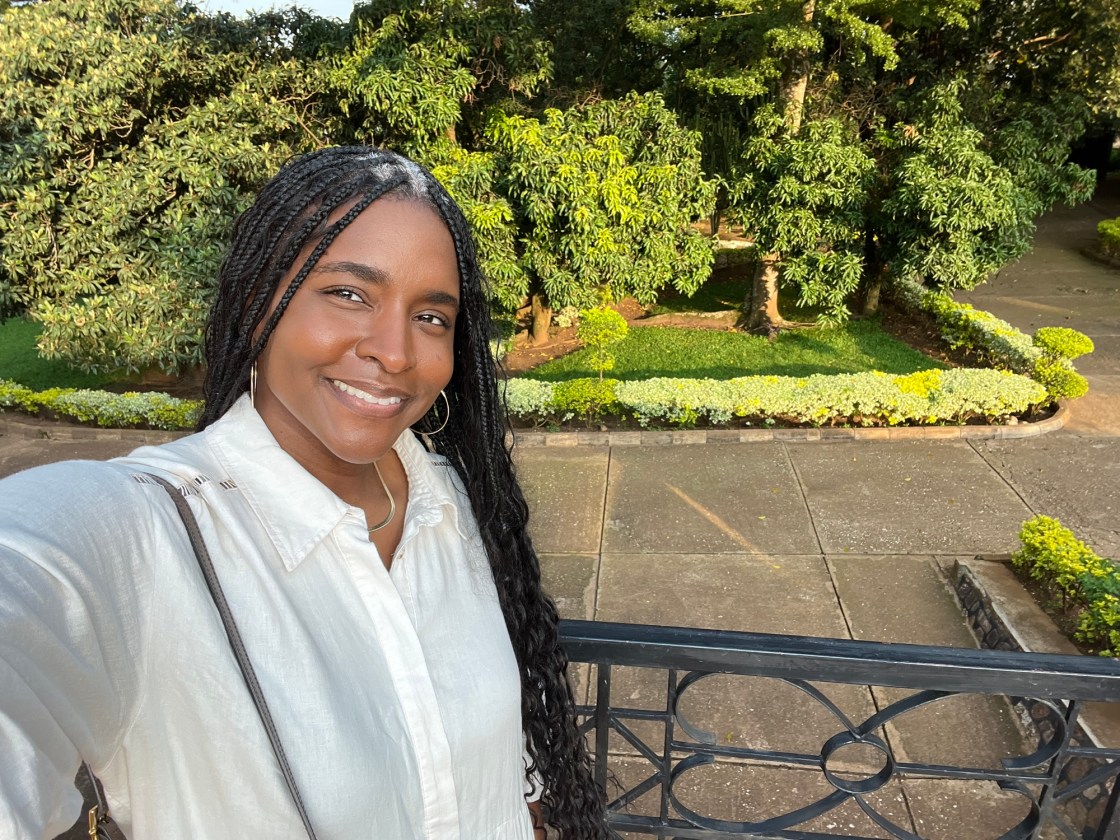
As I reflect on this past year, I’m amazed that I even survived. If I ever doubted the existence of God, I no longer do. My faith has been the anchor that kept me from sinking, and without it, I’m certain I would’ve let the pain consume me. Let me tell you—it’s not easy, especially as a scientist who’s conditioned to seek solutions, to surrender control and hand your life over to God. We all crave control. But this year, I learned that sometimes faith is all you have to hold on to.
This has been the most challenging year of my life. I won’t sugarcoat it. It started badly and ended worse. Postpartum depression hit me hard. I’ve shared that story before, so I won’t go into detail here, but I will say this: when your mind, body, and heart aren’t aligned, it affects every relationship you have. Healing is lonely and exhausting. People don’t always understand the mental weight you carry, and your cries for help can often come out as anger or withdrawal. For someone like me—an overachiever—it’s particularly complicated. No matter how terrible I felt inside, I didn’t let it affect my work. That’s not to say it’s the “right” way or that others should do the same. But for many of us, especially academics, letting our work slip feels like the ultimate failure. And yet, that kind of focus can mask a deep struggle.
In the midst of postpartum challenges, setbacks felt like failures. Anxiety and depression can distort reality, turning you into someone you don’t recognize. And hurt people? They hurt people. I hurt people. I spent the first nine months of 2024 unraveling this truth, and the next month trying to repair relationships I’d strained or broken. Some of the damage is irreparable. I have to accept that.
By October, I thought I’d turned a corner. But life has a way of humbling you when you least expect it. After attending a conference in Atlanta, I returned home to Columbus to find multiple missed calls—from my brother, my aunt, and my mom’s neighbor. None from my mom. My heart sank. When I called my aunt back, she told me my mom was struggling to breathe and had been taken to the emergency room. I was nervous but hopeful. We’d spoken the night before, and she’d seemed fine. Everyone told me there was no need to rush home, but my gut told me otherwise. I booked a flight to Alabama, taking my 22-month-old son with me.
By the time I arrived, my mom’s condition had worsened, though she was still conscious. We talked, but I couldn’t shake the feeling that something was very wrong. The next morning, I got the call I’d been dreading: her lungs had stopped functioning entirely. When I reached the hospital, the doctor explained that my mom would need to be placed on life support. The choice wasn’t really a choice: without it, she’d die; with it, she’d likely still succumb. I chose life support, though it felt like prolonging the inevitable.
Deciding someone else’s fate is a crushing burden. Deciding your mom’s fate? It’s inhumane. My mom is my everything. I was numb as I watched her intubated, pleading with God not to take her from me. I went to the Chapel to pray but when I arrived my fear turned to anger- I was pissed. I yelled at God because I did not understand why he would add this to my already cracking plate. How much did I really need to be tested? Hadn’t I went through enough this year? Had I not stayed on course? I left the Chapel.
The scientist in me needed to see the CT scans, to understand what was happening. What I saw confirmed my worst fears—her lungs were in a dire state. I read journal articles, desperate for hope, but the outlook was grim. When I asked the doctor for honesty, he didn’t sugarcoat it: it would take a miracle. I called my best friend, Alexis, and broke down like I never had before. At the end of our conversation, she said something that stayed with me: “God performs miracles all the time.” Her words sparked a memory of a passage in the Bible, Matthew 9:20-22, where a woman, sick for years, reaches out to touch Jesus’ garment and is healed because of her faith. I know God placed that story in my heart at that moment because it reminded me of my mom. If anyone embodies unwavering faith, it’s her. That woman in the passage? That was my mom—faithful, resilient, and holding on to hope even in the darkest moments.
I went back to the chapel. I prayed like I’d never prayed before. Not as Aeriel the scientist, but as Aeriel the servant. I asked God to heal my mom, to give her another chance. It wasn’t an instant relief, but every time despair crept in, I prayed again.
And then, the miracle happened. After over a week on life support, my mom began breathing on her own. The doctor looked her in the eye and said, “You shouldn’t be here. It’s a miracle that you’re alive.” And he was right. Seeing her alive, I wept. I’ve never been that scared in my life. And now, I understand when people say, “Prayer changes things.” It truly does.
This year has tested me in ways I never thought possible. There’s no neat, silver lining to tie it all up. I’ve been tried, tested, and traumatized. I’ve seen the worst in life, myself, and in people. But I’ve also learned profound truths: life is short and precious, people are not ours to hold onto, and when all seems lost, you can call on God. If nothing else, this year has reminded me that miracles do happen, and they often come when we least expect them. I don’t know what 2025 will bring—whether it will be filled with challenges or blessings—but I choose to remain hopeful. I am deeply grateful to still have my mom here with me, for my beautiful son who brings so much joy to my life, for my students who stepped up to the plate when I couldn’t be there to guide them, and for the friends and family who stood by me through the darkest moments. Their love and support mean everything to me.
I am not sure what you are going through or how 2024 was for you. If it was like mine, I encourage you to hold on to hope. Keep the faith.
From Aeriel, With Love
 Aeriel Views